
Key takeaways
- ✓Pick a firm, level base — patio, concrete or load-checked decking.
- ✓Close to a tap (to fill) and an outdoor RCD socket (for the chiller).
- ✓A filled tub plus a person can weigh 400–600 kg, so mind the base.
- ✓No planning permission needed for a portable or freestanding ice bath.
- ✓A garage is a great spot if you have drainage and ventilation.
Getting the spot right makes an ice bath far nicer to use, and it is mostly common sense once you know what to look for. We position these for customers all the time, so here is the short checklist we run through.
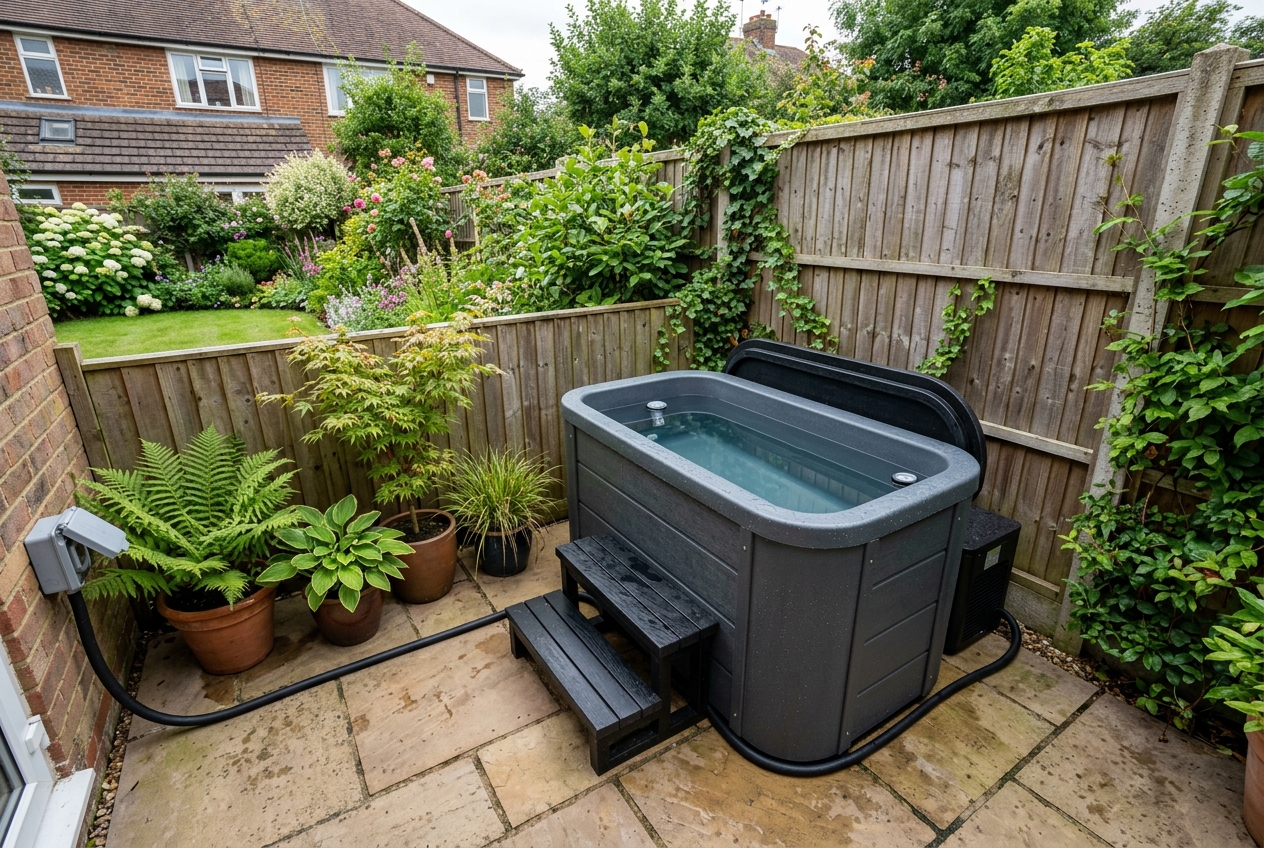
What a good spot needs
Five things matter, in roughly this order:
- A firm, level base. The tub must sit flat and not rock. Solid ground, a patio or a concrete pad is best.
- Near a tap. You fill with a garden hose, so the closer the tap, the easier life is.
- Near a power socket. If you have a chiller it needs a socket. An outdoor-rated, RCD-protected one is ideal.
- A little shade. A chiller in full sun works harder and costs more. Dappled shade or a north-facing corner helps.
- Room to get in and out safely. Leave space to step in, and keep the surround non-slip.
Mind the weight
This is the one people forget. A filled tub holds hundreds of litres of water, and water is heavy. With a person in it, the load can reach 400 to 600 kg in a small footprint. On solid ground that is no problem. On a raised deck or balcony, check it is built for that load, or add support underneath. If in doubt, put it on the ground.
Garden, patio or garage?
Garden or patio
The most popular choice. Fresh air, easy to drain onto the ground, and our tubs are built to live outdoors year-round. Pick a sheltered corner if you can.
Garage or outbuilding
A great option, especially in winter. It keeps the tub out of the weather and gives you privacy. You will need a level floor, a way to empty the water (a floor drain or a pump-out), ventilation so the chiller can breathe, and a proper socket. Avoid sealed, damp rooms with no airflow.
Power and water, done safely
Our chillers run from a standard 13A plug, so you do not need a special circuit or an electrician. Use an outdoor-rated socket on an RCD, keep connections off the ground, and skip the long, thin extension leads. For filling and emptying, a nearby tap and a gentle slope to drain onto make the routine painless. Our delivery and install guide covers access and placement in more detail.
Do you need planning permission?
For a normal home ice bath, no. A portable or freestanding tub is not a building or a permanent structure, so planning rules do not apply. You would only need to think about it if you were building a fixed plunge pool into the ground or putting up a new outbuilding to house it. If you rent, it is worth a quick word with your landlord, mainly about drainage.
In short: firm level base, near a tap and a socket, a bit of shade, and mind the weight. Sorted those? Browse the ice bath range or read our tested pick of the best.
Frequently asked questions
Where is the best place to put an ice bath?+
Outdoors on a firm, level base near a tap and a power socket, with a little shade. A patio, decking (if rated for the weight) or a garden corner all work well.
Do I need planning permission for an ice bath?+
No. A portable or freestanding ice bath is not a building, so it needs no planning permission. Only fixed structures or major groundworks would.
Can I put an ice bath in a garage?+
Yes, and many people do. You need a level floor, a drain or a way to empty it, ventilation for the chiller, and a properly earthed socket. A garage also keeps it out of the weather.
Will my decking take the weight?+
A filled tub plus a person can weigh 400–600 kg. Solid ground or a concrete base is safest. On decking, check it is rated for the load or add support underneath.
Does an ice bath need its own electrical circuit?+
No. Our chillers run from a standard 13A socket. Use an outdoor-rated socket on an RCD, and avoid long thin extension leads.