Key takeaways
- ✓The routine is simple: filter, sanitise, cover.
- ✓With a filter and ozone, change the water every 2–4 weeks; without, every few days.
- ✓Shower before you plunge — it cuts the oils and skin that cloud the water.
- ✓In hard-water areas, protect the chiller from limescale with a filter and occasional descale.
- ✓A lid is the cheapest upgrade for cleaner water and lower running cost.
Keeping the water clean is the part people worry about most, and it is genuinely simple once you have a routine. You are not running a swimming pool. A filter, a little sanitiser and a lid will keep most tubs clear for weeks. Here is the version we give every customer.
Why water goes cloudy
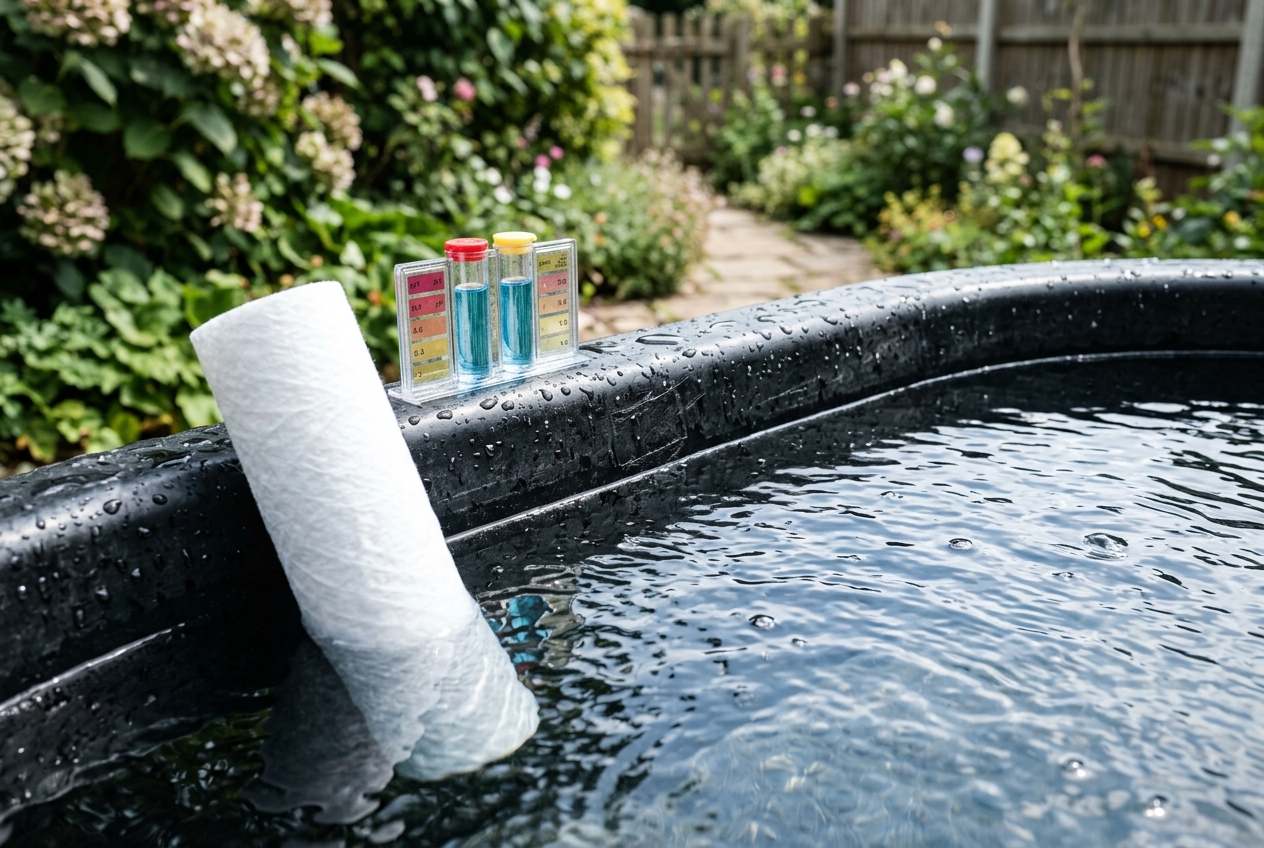
Cold water still picks up body oils, sweat, skin and whatever is on your feet. Left alone, that feeds bacteria and turns the water cloudy. The cold slows it down compared with a warm hot tub, but it does not stop it. The fix is to remove the gunk (filter), kill what is left (sanitiser) and keep new dirt out (lid).
The three-part routine
1. Filter
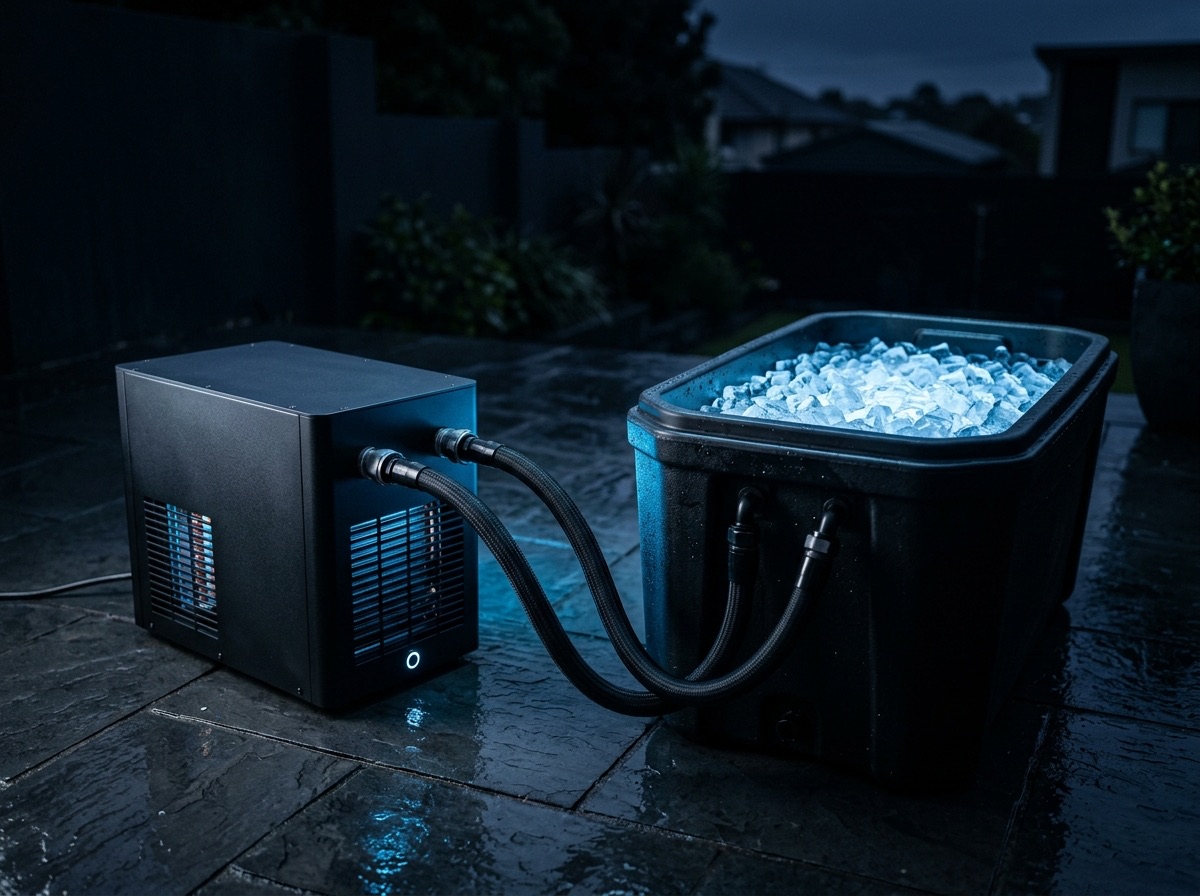
A filter catches the particles before they cloud the water. Many of our chillers have filtration built in and recirculate the whole tub regularly; if yours does not, a simple particle filter on the pump does the job. Rinse it weekly.
2. Sanitise
Ozone is the cleanest option — several of our chillers generate it automatically, and it leaves no smell. If you do not have ozone, a small dose of chlorine or hydrogen peroxide works, exactly as you would treat a paddling pool. Keep it light and let it disperse before you get in.
3. Cover
An insulated lid keeps leaves, dust and insects out between sessions, and it slows the cold escaping, so the chiller works less. It is the cheapest thing you can buy and it earns its keep twice over.
One more habit: a quick rinse or shower before you plunge removes most of the oils and sweat at source, which does more for water clarity than any chemical.
How often to change the water
| Setup | Change every |
|---|---|
| No filter, no sanitiser | Few days |
| Filter only | ~1 week |
| Filter + ozone/sanitiser + lid | 2–4 weeks |
Trust your eyes and nose too — if the water looks cloudy or smells off, change it sooner regardless of the schedule.
UK hard water and your chiller
Much of the UK has hard water, and that matters for a chiller. Over time, limescale can build on the cooling parts and pump, making them work harder and cost more to run. Two simple habits keep it in check: run a filter to keep the water clear, and descale the chiller occasionally with a suitable cleaner if you are in a hard-water area. Wipe any visible scale off fittings. It is the same care you would give a kettle, just less often.
A simple weekly checklist
- Rinse the filter.
- Check the water is clear and odour-free.
- Top up sanitiser if you dose manually.
- Keep the lid on between sessions.
- Every 2–4 weeks (filtered) or sooner: drain, wipe down, refill.
The easy route: a chiller with built-in ozone and filtration does most of this for you. See our chillers, or browse lids and water care.
Frequently asked questions
How often should you change ice bath water?+
With a filter and ozone, every two to four weeks. Without any filtration, every few days. A lid and good hygiene stretch the time between changes.
How do you keep ice bath water clean?+
Three things: a filter to catch debris, a sanitiser such as ozone or a small chlorine dose, and a lid to keep dirt out. Shower before you get in to cut the load.
Why does my ice bath go cloudy?+
Cloudiness is usually body oils, sweat and skin combined with not enough filtration or sanitiser. A filter plus ozone and a quick rinse of the filter fixes most cases.
Does hard water damage an ice bath chiller?+
Over time, limescale can build on the chiller's parts in hard-water areas. A filter and an occasional descale protect it; wipe visible scale off and keep the water balanced.
Can I use chlorine in an ice bath?+
Yes, in small amounts, like a paddling pool. Ozone or a low chlorine or hydrogen-peroxide dose all work. Keep it light and let it disperse before you get in.