Key takeaways
- ✓Contrast therapy = hot (sauna) then cold (ice bath), repeated.
- ✓A typical round: 10–15 min hot, 1–3 min cold; do 2–3 rounds.
- ✓Finish on cold to feel alert and stop sweating afterwards.
- ✓No sauna? A hot shower before your plunge gives a simple version.
- ✓Two to four times a week is plenty.
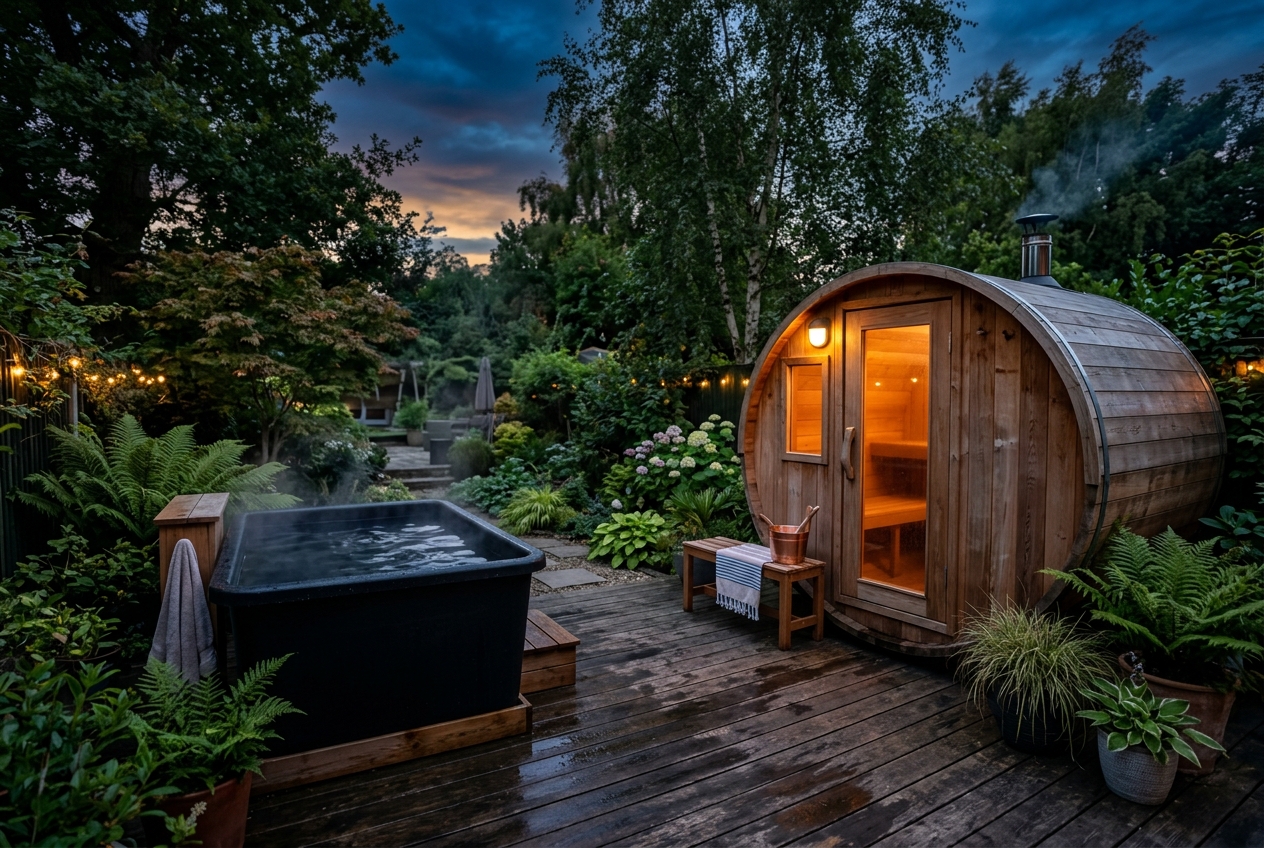
Heat then cold is one of the oldest recovery rituals there is, from Nordic saunas to Roman baths. The modern home version pairs a sauna with an ice bath, and it feels superb. Here is how to do it simply and safely.
Why heat and cold together
Heat opens the blood vessels and relaxes the muscles. Cold closes them and sharpens you up. Swinging between the two gets the circulation pumping and leaves most people feeling clear-headed and loose. It is also just a very pleasant way to spend twenty minutes.
A simple routine
If you have a sauna and an ice bath, this is a reliable starting point:
- Warm up: 10–15 minutes in the sauna, until you are properly warm.
- Cold: 1–3 minutes in the ice bath. Breathe slowly and stay calm.
- Repeat: two or three rounds.
- Finish: end on the cold, then dry off and warm up gently.
Keep the cold portion short. The sauna can be longer; the plunge does not need to be. Our guide on how cold and how long covers the ice bath side in detail.
Hot or cold to finish?
Most people finish on cold. It leaves you alert and stops the after-sweat you get if you end hot. The exception is if you are heading to bed soon, when ending warm can help you wind down. Try both and see which suits you.
No sauna? A simple version
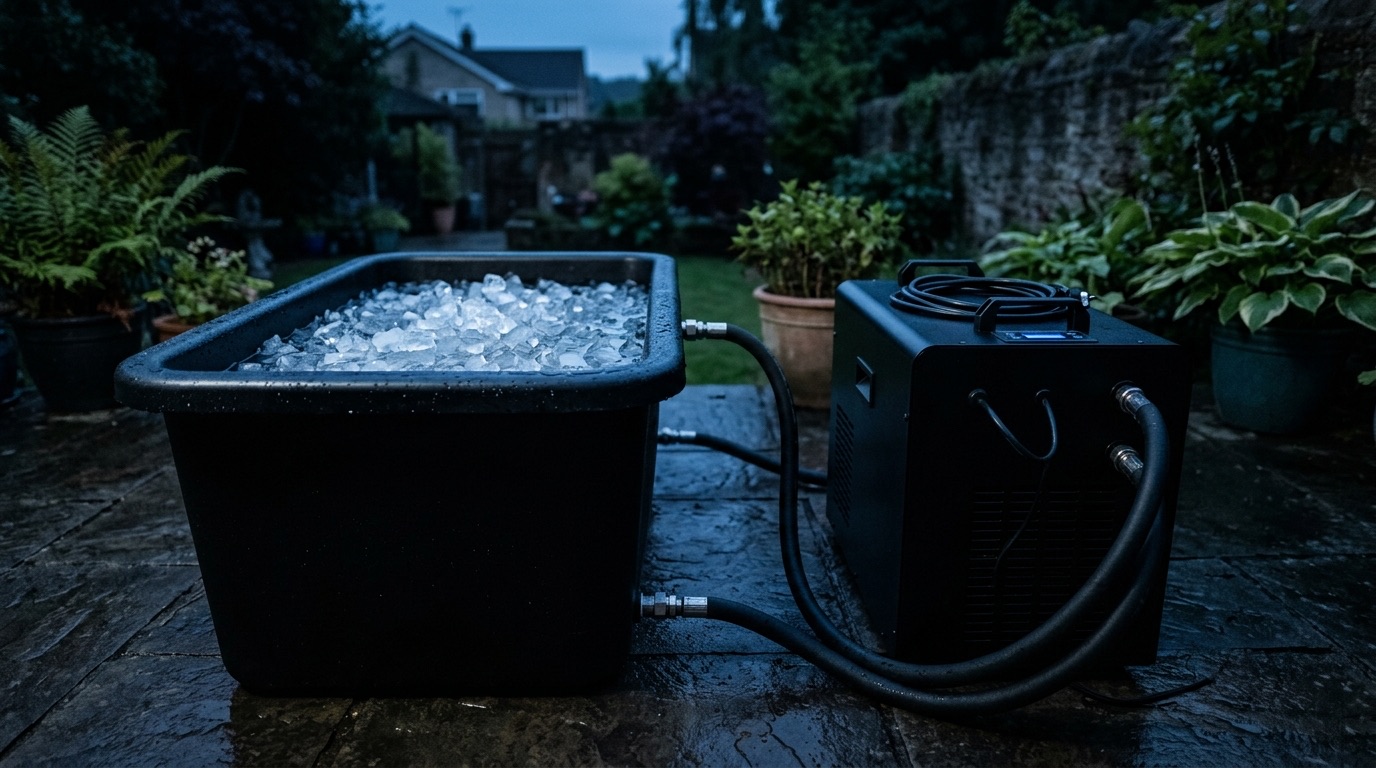
You do not need a full sauna to feel the benefit. A hot shower or bath before your plunge gives you a basic hot-then-cold cycle. A chiller-equipped tub makes the cold side effortless, since the water is always ready at the temperature you set. If you are setting up from scratch, our best ice baths guide is the place to start, and many people add a sauna later.
Staying safe
Move between hot and cold steadily, not in a rush. Do not do contrast therapy alone if you are new to it. Skip it, or check with your GP first, if you are pregnant or have a heart condition. Drink water — the heat side will make you sweat.
Frequently asked questions
What is contrast therapy?+
Alternating between heat and cold — usually a sauna then an ice bath — to leave you feeling refreshed and to aid recovery. The swings in temperature get the blood moving.
What is the best sauna and ice bath routine?+
A common cycle is 10–15 minutes hot, then 1–3 minutes cold, repeated two or three times. Always finish on cold, then warm up gently.
Should you end on hot or cold?+
Most people finish on cold. It leaves you alert and stops you sweating afterwards. If your goal is to sleep soon after, you may prefer to end warm.
How often should you do contrast therapy?+
Two to four sessions a week suits most people. It is the cold that drives the bulk of the effect, so the same weekly guidance applies.
Do I need a sauna and an ice bath?+
For full contrast therapy, yes — a heat source and a cold one. If you only have an ice bath, a hot shower before your plunge gives a simple version of the same effect.